Losing weight in your 50s can feel different from losing weight earlier in life. Your routine may be less active, old injuries can affect how you exercise, and the habits that once worked may no longer fit your lifestyle.
But meaningful progress is still possible. The aim is to reduce excess body fat while protecting the strength, mobility and confidence that help you stay active.
Vive Fitness’s Fraser Smith recently contributed to The Telegraph’s guide to losing weight in your 50s, highlighting the importance of combining aerobic exercise with strength training and building up gradually.
Here, we explore how to put that advice into practice, including where walking, resistance exercise and supervised EMS training can fit.
What is the best way to lose weight in your 50s?
A sustainable approach combines a manageable calorie deficit, regular muscle-strengthening exercise, aerobic activity and eating habits that support your training. Start at a level you can repeat, increase activity gradually and track improvements in strength and everyday movement alongside changes in weight.
There is no single workout that replaces all of these elements. Your food choices influence your energy intake, while exercise supports fitness, strength and the ability to maintain an active lifestyle.
Why strength matters when losing weight after 50
As Fraser explained in The Telegraph:
“One of the main hurdles people face from middle age onwards is sarcopenia, the gradual loss of muscle mass and strength.”
That makes strength an important consideration when planning weight loss. A lower number on the scales is only part of the picture. You also want to remain capable of climbing stairs, carrying shopping, getting up from the floor and enjoying the activities you value.
If your current approach consists mainly of eating less, consider what you are doing to challenge your muscles. If you mainly walk, consider how you could add resistance exercise.
Strength training gives you something useful to work towards beyond a target weight. Being able to perform a movement more comfortably, use slightly more resistance or complete an extra controlled repetition are all practical signs of progress.
Can losing weight in midlife improve your health?
Research highlighted by University College London in October 2026 offers encouragement.
Researchers analysed data from more than 6,000 British adults. Participants who had previously been overweight and sustained a weight loss of at least 5% into their mid-50s had comparable levels of certain cardiovascular and metabolic markers at age 62 to those who had maintained a healthy weight.
These included cholesterol, blood pressure and markers of inflammation.
This was observational research. It does not prove that losing weight reverses every effect of previous weight gain, or that everyone will experience the same outcome. It does suggest that making changes in midlife can still be worthwhile.
For someone weighing 90kg, 5% is 4.5kg. That is an illustration of the study’s threshold, rather than an individual weight-loss prescription.
Make strength training part of your week
The NHS physical activity guidelines for adults aged 19 to 64 recommend muscle-strengthening activities involving all the major muscle groups on at least two days each week.
Depending on your experience and health, this might involve bodyweight movements, resistance bands, gym machines or free weights.
A trainer can help you choose manageable versions of movements such as:
- Sitting down and standing up from a chair.
- Pressing against a wall or raised surface.
- Pulling a resistance band towards your body.
- Stepping onto a suitable low platform.
The right starting point is the version you can perform with control. Exercise should become progressively more challenging as your ability develops, rather than starting at an intensity that leaves you unable to continue your normal week.
If you have not exercised for some time, or have medical conditions or concerns, speak to your GP before starting. Your programme should account for your current fitness and any relevant limitations.
Keep walking, cycling or swimming
Strength work and aerobic activity serve complementary purposes.
The NHS recommends at least 150 minutes of moderate-intensity activity a week, or 75 minutes of vigorous activity, alongside strengthening exercise. You can build towards this gradually and spread activity across the week.
For many people, walking is a convenient starting point. Try a short walk at lunchtime, an active part of your commute or a regular weekend outing. Cycling and swimming may also suit your preferences and circumstances.
Make the plan specific. “Walk for ten minutes after lunch on weekdays” is easier to act on than “be more active”.
Break up long periods of sitting too. A scheduled workout is valuable, but there are also opportunities to move between meetings, household tasks and journeys.
Where does EMS training fit?
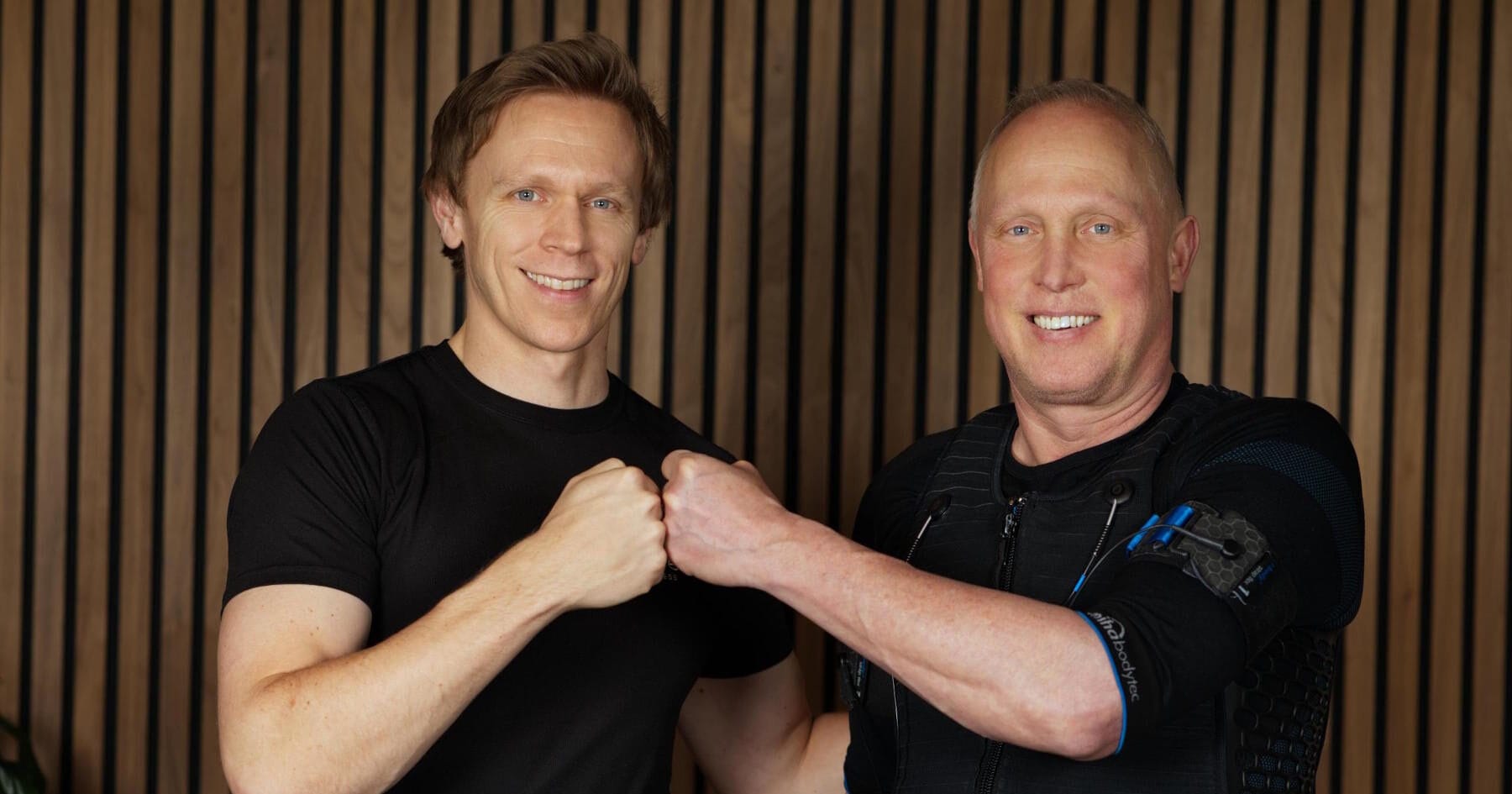
EMS training at Vive Fitness uses electrical impulses to stimulate muscle contractions while you perform guided exercises. Sessions last 20 minutes and are supervised by a trainer.
For someone who struggles to make time for exercise, a short appointment may be easier to protect in the diary. The personal guidance can also help when returning to structured training.
However, EMS should be considered within your overall programme. It does not replace a balanced diet, regular aerobic activity or movement throughout the day, and a 20-minute session should not be treated as automatically meeting your weekly activity targets.
Your suitability, session intensity and recovery needs should be assessed individually. Tell your trainer about medical conditions, implanted medical devices, medication and recent surgery before considering EMS, and obtain medical clearance where needed.
If your goal is weight loss after 50, ask how EMS would fit alongside your walking, nutrition and other exercise. The useful question is how the whole routine supports your goals.
Could Reformer Pilates be part of the plan?
Some people find that a guided, low-impact exercise setting makes it easier to establish a routine.
Vive’s Reformer Pilates sessions use spring resistance and are available in private or semi-private formats at Westminster and Richmond. Sessions can focus on controlled movement, strength and mobility.
Whether a particular session provides sufficient muscle-strengthening work depends on its content and how challenging it is for you. Discuss your goals with your instructor so the exercises and resistance are appropriate.
Choose exercise you can attend consistently and progress over time. Enjoying the process matters when you want the habit to last.
Eat to support fat loss and your training
Weight loss generally requires taking in less energy than your body uses. The NHS guidance on overweight and obesity recommends a balanced diet, reduced calorie intake and increased activity, with additional support where needed.
You do not have to begin by banning entire food groups. Start by looking at the meals, snacks and drinks you consume regularly.
Useful changes might include:
- Including a protein source such as eggs, fish, yoghurt, tofu or beans at meals.
- Making vegetables, fruit and fibre-rich foods a regular part of your diet.
- Reviewing portions and extras that are easy to overlook.
- Planning meals for busy days.
- Reducing alcohol if it contributes significant calories to your week.
Your plan should leave you able to train and function well. If restriction repeatedly leaves you exhausted, intensely hungry or unable to maintain your routine, seek tailored advice.
Vive’s nutrition coaching can help you develop practical eating habits alongside your training. If you have complex dietary or medical needs, a registered dietitian or your healthcare team can provide appropriate support.
Build a routine you can repeat
Fraser’s advice in The Telegraph emphasises giving your body time to adapt. That principle is particularly useful if you are returning after a long break.
Start by looking at your actual diary. Choose a realistic training appointment, plan short opportunities for walking and allow time to recover between demanding sessions.
Review the plan after a few weeks:
- Are the appointments realistic?
- Are the exercises becoming more manageable?
- Are you recovering comfortably?
- Which habits are easiest to maintain?
- What needs adjusting?
Protect time for sleep too. If persistent sleep problems, pain or menopausal symptoms are making daily life and exercise difficult, seek appropriate healthcare advice.
Progress does not require every week to be perfect. A missed session is a reason to adjust the schedule and resume, rather than abandon the plan.
Frequently asked questions
Can you lose weight after 50?
Yes. Sustainable changes to food intake and activity can support weight loss after 50. The best approach depends on your health, routine and starting point. If you are struggling despite sustained efforts, your GP can assess whether additional weight-management support would help.
What is the best exercise for weight loss over 50?
There is no single best exercise for everyone. Combine aerobic activity you enjoy with muscle-strengthening work suited to your ability. A routine you can repeat and gradually progress is more useful than an ambitious programme you cannot sustain.
Is walking enough?
Walking can be a useful part of your activity plan. For a more rounded routine, include exercises that challenge the major muscle groups too. Weight change also depends on food intake and other individual factors.
Is EMS suitable for everyone over 50?
No exercise method is suitable for everyone. Age alone does not determine whether EMS is appropriate. Your medical history, current health and suitability screening matter, and some conditions or devices can rule it out.
Start your next chapter with Vive Fitness
You do not need to arrive feeling fit or knowing exactly which exercises to choose.
Vive Fitness offers supervised EMS training in Mayfair, Westminster and Richmond, alongside Reformer Pilates in Westminster and Richmond and nutrition coaching to support your goals.
If you want to lose weight in your 50s while making strength a priority, start with a conversation about your current routine, exercise experience and what you would like to achieve.
Explore Vive Fitness’s introductory sessions and find an approach you can build into everyday life.